
Colorado Springs Commercial Moving Guide for Business Owners
iHaul iMove Team
Moving Expert
Planning a business move in Colorado Springs? How offices, clinics, schools, shops, agencies, and warehouses plan dates, buildings, vendors, and snow backups.
Most business owners picture a commercial move as a truck, a crew, and a long day of carrying. That part matters, but it is seldom where a move falls apart. The trouble usually starts earlier: a dock nobody reserved, an equipment technician whose first opening is next Thursday, a new suite that is not ready when the old lease runs out, or a snowstorm on Monument Hill the morning everyone was counting on.
This guide is for owners, office managers, and facilities leads planning a business move in Colorado Springs and El Paso County. It covers how different kinds of businesses set their move dates, what our crew handles and what your vendors handle, how local buildings shape the plan, and how to prepare for Front Range weather. Each section points to a more detailed page in our commercial moving section, so you can go straight to the one that fits your business.
Start With the Date Your Business Cannot Miss
Before you compare movers, pick out the one date that controls the rest. For a law firm it is often a filing deadline or a trial setting. An accounting practice avoids tax season. A dental practice wants to close after the last patient of the week and reopen the next Monday. A public school has the summer between the last teacher workday and the first day back. A government office may not have any date at all until purchasing issues the order.
Once that anchor date is set, three more questions shape the plan:
- What has to work on the first morning? Reception, phones, and a handful of desks may matter far more than the supply closet or the break room.
- Who else has to touch something? Equipment vendors, licensed trades, your IT contact, and both landlords all have their own schedules.
- What happens if the date slips? A backup day, agreed with both buildings at the start, costs far less than a scramble.
Write the answers down and share them with everyone involved. A crew can move nearly anything, but no crew can rescue a schedule that was never written down anywhere.
Find Your Business Type in Six Commercial Families
A veterinary clinic and a distribution center share almost nothing except a loading door, so our commercial pages are grouped into six families. Each family page explains how that kind of business usually plans and who signs off.
Professional offices. Law firms, CPA practices, insurance agencies, engineering firms, and agencies move files, desks, and people. The hard part is usually the file room and the building’s move rules. Downtown firms near the courthouse on South Tejon Street deal with shared freight elevators and small docks, which is why our law office moving page starts with linear feet of files and elevator windows. The business and professional offices hub covers the rest of this group.
Healthcare practices. A clinic move is really two moves happening around each other. In a dental office, the supply company’s technician takes the chairs, delivery units, compressor, and x-ray equipment out of service and installs them at the new suite. Our crew moves the reception area, business office, private offices, break room, and supply shelving. Dental office moving shows how those two schedules fit together, and the healthcare hub takes in physician practices, walk-in clinics, therapy offices, and animal hospitals.
Schools, churches, and community groups. These organizations move on a calendar set by a board, a district, or a congregation. District schools in D11, Academy District 20, Harrison School District Two, and District 49 plan around the summer break, the custodial floor schedule, and the purchase order. See public school moving and the education, civic, and community hub.
Retail, restaurants, and hospitality. Every closed day costs sales, so these moves are built around the last shift and the trade appointments. In a restaurant, a licensed gas fitter, the refrigeration contractor, and the fire-protection company clear the cooking line first. Our crew then moves dining furniture, freestanding stainless tables, shelving, and smallwares. Restaurant moving walks through that order, and the retail, restaurant, and hospitality hub covers shops, salons, gyms, hotels, and venues.
Property, institutional, and government offices. Here the person paying for the move is often not the person who sets the rules. City and county departments run on purchase orders and facility procedures. Property managers book moves on behalf of owners. The administrative offices of defense and aerospace firms, in commercial buildings off base along the Powers corridor and north toward the Air Force Academy, follow the firm’s own security office. Read government office moving, defense industry office moving, and the property, institutional, and government hub.
Warehouses and light industrial spaces. These moves are counted in zones, bins, and pallets rather than rooms. The receiving dock at the new building is where they succeed or fail, so each truck carries one zone in bin order. Your inventory lead owns the counts, and your racking installer handles the racking. Warehouse moving and the warehouse and light industrial hub have the dock-to-dock detail.
Draw a Clear Line Between the Crew and Everyone Else
The most useful document in a commercial move plan is a simple list with a name beside every item. Every page in our commercial section includes one, and it answers the question customers ask most: who handles this?
What our crew handles. Anything the crew can carry, roll on a hand truck, or take apart with hand tools. That includes desks, chairs, filing cabinets, bookcases, freestanding shelving, conference tables, cartons, boxed inventory, and break room furniture. At each desk, the crew can also disconnect, label, pad, move, and reconnect the computer or laptop dock, the monitors, the desk printer, and the peripherals.
What your IT contact handles. The network, wireless, servers, the phone system, the telecom closet, logins, and any reimaging. The smoothest moves have the IT contact on site, or at least reachable by phone, the evening the desks go back together.
What licensed trades and vendors handle. Anything plumbed, gas-fed, or hard-wired into the building goes to a licensed trade. Equipment under a service contract, or anything that needs calibration, goes to its vendor. Heavy machines, powered equipment, and pallet racking belong to the equipment dealer or installer. We build our truckloads into the gaps between their visits, so no two groups need the same room at the same time.
What your staff handles. Personal items, confidential papers, original documents, controlled substances, alcohol inventory, and anything else your business keeps under its own control. Your people pack or carry those items under your own procedures.
When every line on the inventory has an owner, move night is mostly carrying. When some lines are blank, move night turns into phone calls.
Use the Scope Pages for the Tricky Parts
The industry pages are organized by kind of business. Our commercial service pages are organized by kind of job, such as workstations, cubicles, or files, and apply to any industry. A few of them come up in nearly every Colorado Springs office move.
- IT workstation moves. How the crew photographs each port layout, tags every piece to the new seat number, and plugs each desk back in the way it was set up, while your IT contact follows behind and tests.
- After-hours and weekend moves. How evening and weekend moves work on request, with most of the packing done during normal hours so the actual move fits inside the window both buildings allow.
- Winter commercial moves. How we plan business moves between October and April with a reserved backup date, a go or no-go call the day before, and floor protection for wet boots.
If you are moving an ordinary office suite, start with our office moving page, which explains labeling, phased moves, and getting staff working again on day one. If you would rather not pack the shared rooms yourself, our packing services can handle files, supply rooms, and back stock while your team keeps working.
Colorado Springs Buildings Each Have Their Own Rules
The same move plays out very differently depending on the building. Knowing which kind you are leaving and which kind you are moving into will save a lot of back-and-forth with property managers.
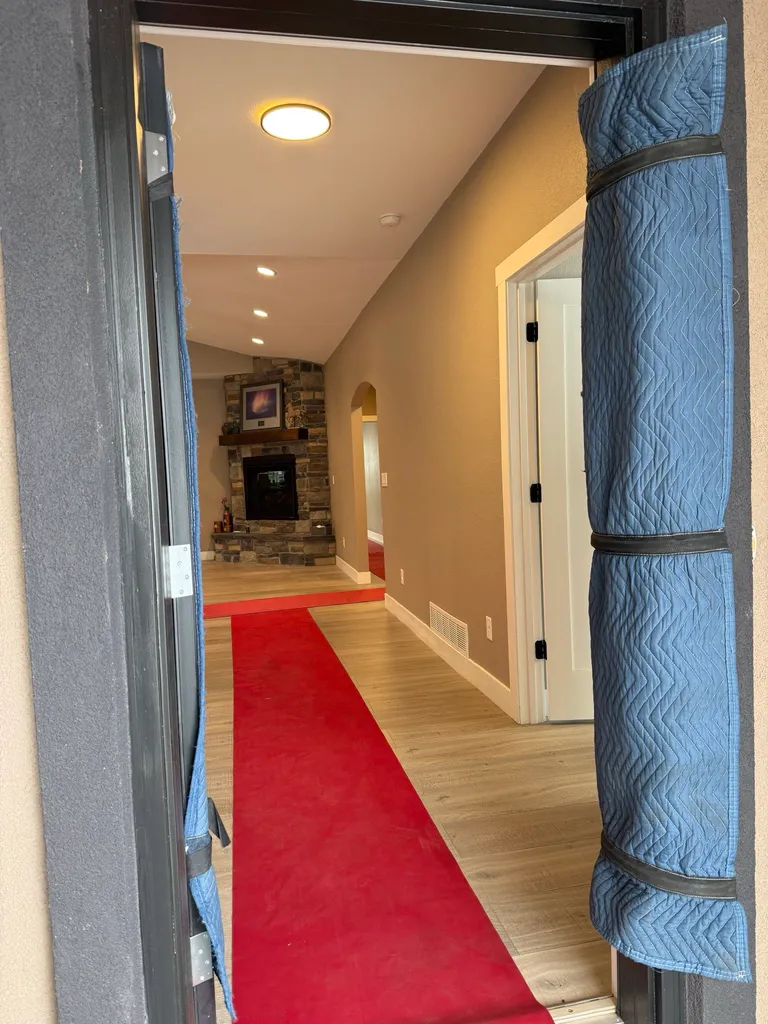
Downtown towers and older buildings. Offices along Tejon Street, Cascade Avenue, and Pikes Peak Avenue often share one freight elevator and a small dock among many tenants. Curb space fills early on weekdays. Expect to reserve the elevator and dock in advance, pad the elevator car, and protect corridors. Our downtown Colorado Springs movers page describes the area in more detail.
North-side office parks. One- and two-story buildings in Briargate and InterQuest usually have no dock and no freight elevator. The truck parks where the manager allows, and the crew carries across the lot. The distance between suites may be short, but two landlords with two sets of rules still apply. The old lease may also require you to remove signage, patch anchors, or pull your own cable before you return the keys. Suburban office park moving covers that handover.
The Powers corridor and the east side. Newer flex buildings and office suites along Powers Boulevard and toward Marksheffel Road tend to have better truck access. Many tenants there have badge-controlled entries and security rules of their own. Ask early who issues visitor badges and whether the crew’s names are needed ahead of time.
Certificates of insurance. Most managed buildings want a Certificate of Insurance from the mover that names the owner and the management company. We provide one on request. Ask each property manager for the exact wording they need, since building requirements vary.
Plan for Front Range Weather From the Start
Colorado Springs winters are uneven. A storm can close I-25 over Monument Hill for part of a day, bury the east side while downtown stays dry, and then melt off by the next afternoon. For a business moving between October and April, the weather is a planning item, not a surprise.
Build three things into a winter plan. First, reserve a backup date at the same time you book, and tell both buildings, the elevator desks, and your vendors about it. Second, agree on who makes the go or no-go decision and when; we make that call with you the day before. Third, ask both property managers who clears and treats the docks, ramps, and walkways, and make sure the heat is on in the new space before move day.
Summer has its own crunch. Schools, churches, and many offices try to move between June and August, and month-end dates fill quickly. A business that can move mid-month, or on a weekday evening on request, will have more dates to choose from.
A Planning Timeline That Works Backward
Every business is different, but most successful moves follow roughly the same order. Treat this as a checklist, not a fixed schedule.
- Confirm the anchor date and a backup. Get the new lease start, the old lease end, and any blackout dates on one calendar.
- Collect both buildings’ move rules. Ask for elevator and dock booking rules, allowed hours, protection requirements, and the insurance certificate wording.
- Book the vendors and trades. Equipment technicians, licensed trades, your IT contact, and any furniture installers set dates that the move has to fit around.
- Schedule a walkthrough. We look at both spaces, count what moves, and note anything that needs a vendor. You get a written quote with a transparent hourly breakdown.
- Make the floor plan and labels. Number the rooms and seats on the new floor plan. Every carton and piece of furniture gets a label that matches.
- Decide what stays behind. Surplus furniture, old files headed for shredding, and anything the landlord keeps should be marked before the crew arrives, not during the move.
- Pack in stages. Shared rooms and back stock can be packed days ahead. Personal desks get packed on the last afternoon.
- Move, reconnect, and check. The crew sets furniture to the plan and reconnects desk equipment. Your IT contact tests each seat, and a walkthrough with your office manager confirms every room before the crew leaves.
Get a Free Commercial Moving Quote
iHaul iMove has been moving Colorado Springs homes and businesses since 2008, from downtown suites to office parks along I-25 toward Monument and Castle Rock, with coverage into the Denver metro and Northern Colorado. Your equipment rides on our truck with our crew, on the date we confirm with you.
To start, gather your anchor date, both buildings’ move rules, and a list of everyone else who has to touch something. Then browse the commercial moving hub for your industry, call us at 719-357-5865 any time to start planning, or request a free quote below.
help Frequently Asked Questions
When should a Colorado Springs business book its commercial move? expand_more
Can iHaul iMove move our business in the evening or on a weekend? expand_more
Who disconnects our computers and phones before the move? expand_more
What happens if it snows on the day of our commercial move? expand_more
How much does a commercial move cost in Colorado Springs? expand_more
Written by iHaul iMove Team
The iHaul iMove team has over 18 years of experience moving families across Colorado. We share our expert knowledge to help make your next move your best move.
See About Us →Ready to make your move?
Get a guaranteed price quote for your move in Colorado Springs. No hidden fees, just honest service.
Experience Our Unwavering Promise
At iHaul iMove, punctuality, transparency, and the meticulous care of your property are not just policies—they are our unwavering promise. If we're not 5 minutes early, we consider ourselves late. Discover the difference of a truly dedicated moving partner.
Contact Our Team
Call Us 24/7
719-357-5865Email Us
info@ihaulimove.comLocation
Colorado Springs, CO
Hours
Open 24 hours a day