Commercial Service

Commercial Crating in Colorado Springs

Crates measured and built for exhibit pieces, framed art, showroom samples, and demonstration equipment, with skids and labels for the receiving team.

(719) 357-5865
Commercial Crating moving in Colorado Springs: moving crew at work
  • 18+ Years Experience
  • 1,013+ Reviews 5-Star Rated
  • Family Owned Local Business

Start your free commercial move quote

verified For estimate purposes only credit_card_off No credit card required

How We Plan Commercial Crating

Some pieces should not travel in a moving blanket: a framed painting with glazing, a museum case, a trade show kiosk, a showroom sample with a lacquered finish, a demonstration unit with a screen and moving parts. For those, we build a crate around the piece. The service follows the same steps every time, and it extends our custom crating service to business and institutional work.

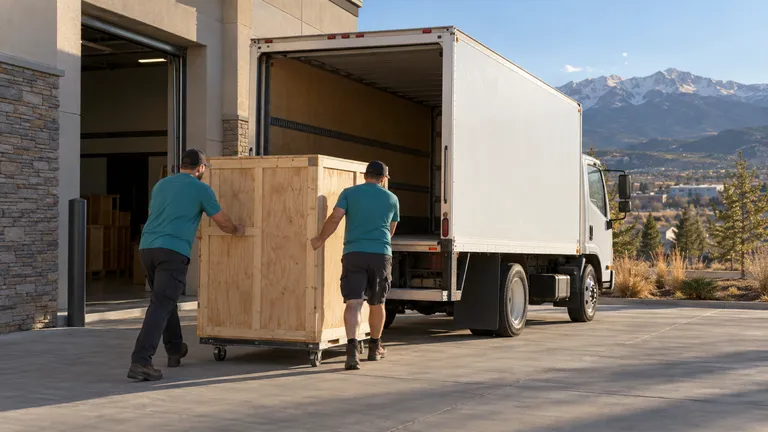
First, we measure the piece and note its weight, its fragile points, and which way it must ride. Second, the piece's owner prepares it. A registrar or curator approves how artwork is wrapped, and an equipment vendor locks down moving parts and removes anything that detaches. Third, we build the crate to those measurements, with foam or blocking at the contact points, internal bracing, and skids so it can ride on a pallet jack or dolly. Fourth, the crate is labeled with a piece number, orientation arrows, and handling notes, then loaded, delivered, and opened where the receiving team wants it.

Who usually signs off
Facilities lead, exhibit manager, gallery registrar, or business owner approving the item list and handling instructions
Timing that works
Measurement a week or more before the pickup, after the piece's owner has prepared it, with crating finished before the exhibit changeover, showroom reset, or vendor pickup.

What typically moves

  • Framed paintings and works on paper Wrapped as the registrar directs, then fitted in a crate with padded blocking at the frame, never touching the surface.
  • Sculptural pieces and three-dimensional displays Blocked at points the owner approves, with the crate sized so the piece cannot shift in transit.
  • Freestanding exhibit panels and kiosks Crated in sets with hardware bagged inside each crate, numbered to match the exhibit layout.
  • Showroom and trade samples Finished faces protected with a soft layer before the crate's foam goes in.
  • Demonstration and display equipment Crated after the vendor has secured moving parts and removed detachable pieces, which are packed in the same crate.
  • Display cases with glass Glass removed and crated separately in slotted crates, with the case body in its own crate.

Access and scheduling

Measurement comes first and cannot be rushed. We need access to each piece, a clear space around it, and someone who knows its handling rules. For artwork that is usually the registrar, and for equipment it is the vendor's technician. We confirm the doors, elevator, and dock at the pickup and delivery points before building, since a crate is always larger than what goes inside it. A crate that will not fit the delivery door is a crate built wrong.

Crates are then built to those measurements and brought to the piece, or the piece is crated in place. Either way, the pickup date follows the owner's preparation. Galleries, museums, and exhibit venues often set installation and changeover windows, and many want our insurance certificate before the first visit. Evening and weekend pickups are possible on request when a venue can only open its dock after hours.

Protection and handling

What touches a piece is the owner's call. The registrar, curator, or vendor tells us which surfaces can bear weight, what wrap may touch the finish, and how the piece must be oriented. We build to that. Contact points get foam or padded blocking, glass is taped or removed as the owner directs, and the crate's interior is lined so nothing rubs in transit.

Each crate carries a piece number that matches the owner's list, arrows for the upright side, a note if the contents are top-heavy, and where to open it. Crates ride on skids and move on pallet jacks or dollies, never tipped past the orientation marks. At delivery, we open crates where the receiving team asks, and the registrar or vendor inspects the piece before signing off. Empty crates can be kept by the client for the return trip or hauled away.

Who does what

Some of this job belongs to other trades. The written plan names each one.

Condition reports and art handling rules
The registrar, curator, or conservator documents each piece and sets how it may be wrapped and handled.
Preparing and reinstalling equipment
The equipment vendor secures moving parts and removes detachable pieces, then reinstalls and tests them after delivery.
Installed or anchored exhibit pieces
The exhibit installer or fabricator takes them down and reinstalls them, with rigging where a piece requires it.

Not part of our work

  • Export paperwork, international shipping standards, or customs documents.
  • Condition reports, valuation, or conservation work on art.
  • Rigging, forklifting, or craning heavy pieces.

Around Colorado Springs and El Paso County

Colorado Springs has galleries and exhibit spaces downtown near Tejon Street and in Old Colorado City and Manitou Springs, college collections at Colorado College and UCCS, and showroom and trade show work that travels up I-25 to the Denver metro. Downtown venues often mean a tight elevator and a curb load, so crate sizes are checked against those doors before building.

The crew that shows up

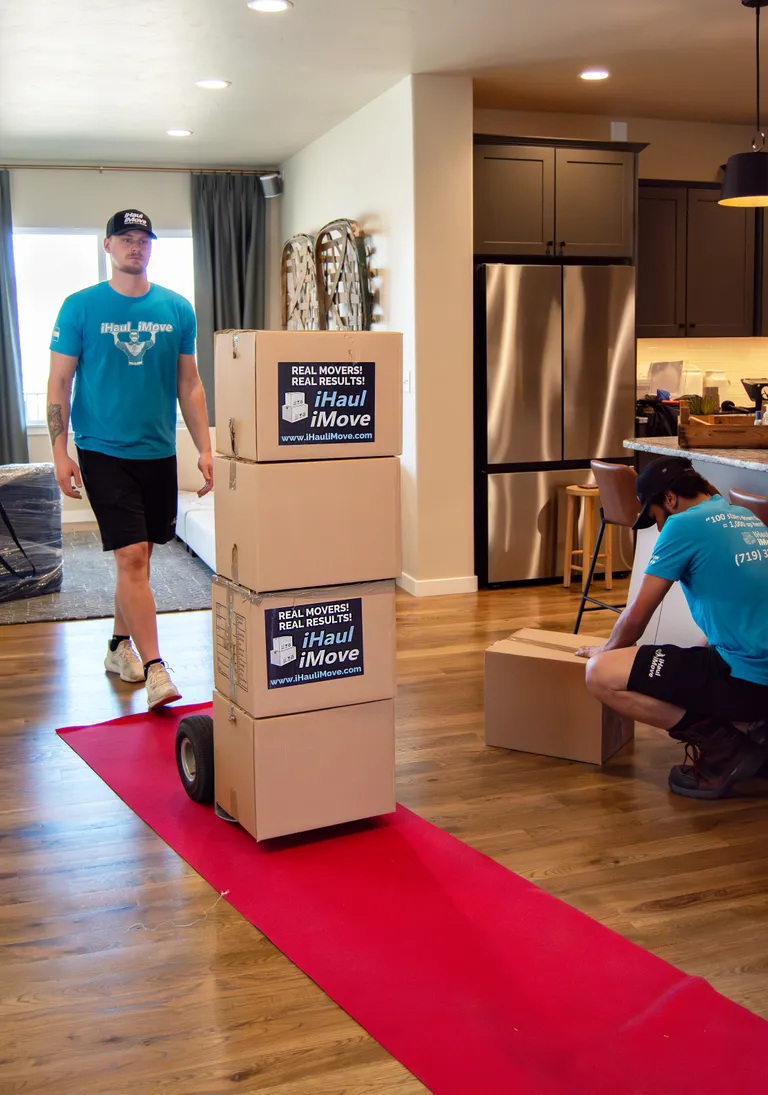
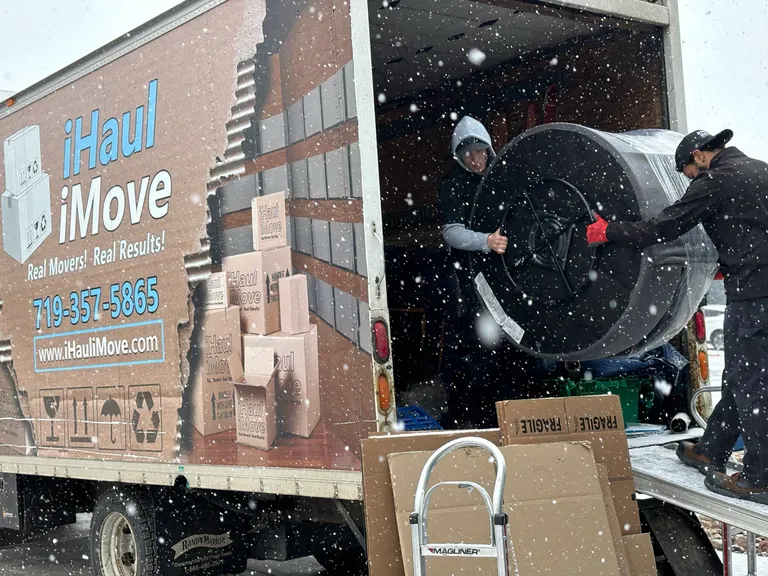
iHaul iMove crew loading a padded item into the truck as snow fallsiHaul iMove crew in teal shirts gathered beside the company truckiHaul iMove mover rolling stacked boxes across a floor runner

Commercial Crating FAQs

Another question? Call (719) 357-5865.

What do you need before measuring an exhibit piece for a crate?

Access to the piece with room around it, its approximate weight if known, and the person who knows its handling rules. For art, that is the registrar or curator. For equipment, it is the vendor. We also need the door, elevator, and dock sizes at the delivery address.

Who decides what can touch a painting or sculptural surface?

The registrar, curator, or conservator. They tell us which surfaces can take blocking, what wrap is allowed, and how the piece must ride. We build the crate to those instructions and do not improvise on contact points. If something is unclear, we ask before building.

Can a crate be made around demonstration equipment before its vendor arrives?

We can measure it and build the crate ahead, but the equipment goes in only after the vendor has secured it. Moving parts need locking, and detachable pieces need removing. Once the vendor signs off, we fit the unit and its parts in the crate.

How will the receiving team identify crates for different displays?

Every crate carries a piece number that matches your list, plus the display or room it belongs to, orientation arrows, and where to open it. Send the receiving team the list before delivery so they can stage crates where each display will go.

Plan your business move

Tell us both addresses, the building rules you know about, and the dates you cannot move. We will send back a written plan and estimate.

Call (719) 357-5865

Open 24 hours a day

Call Now call 719-357-5865