Commercial Service

Retail Fixture Moving in Colorado Springs

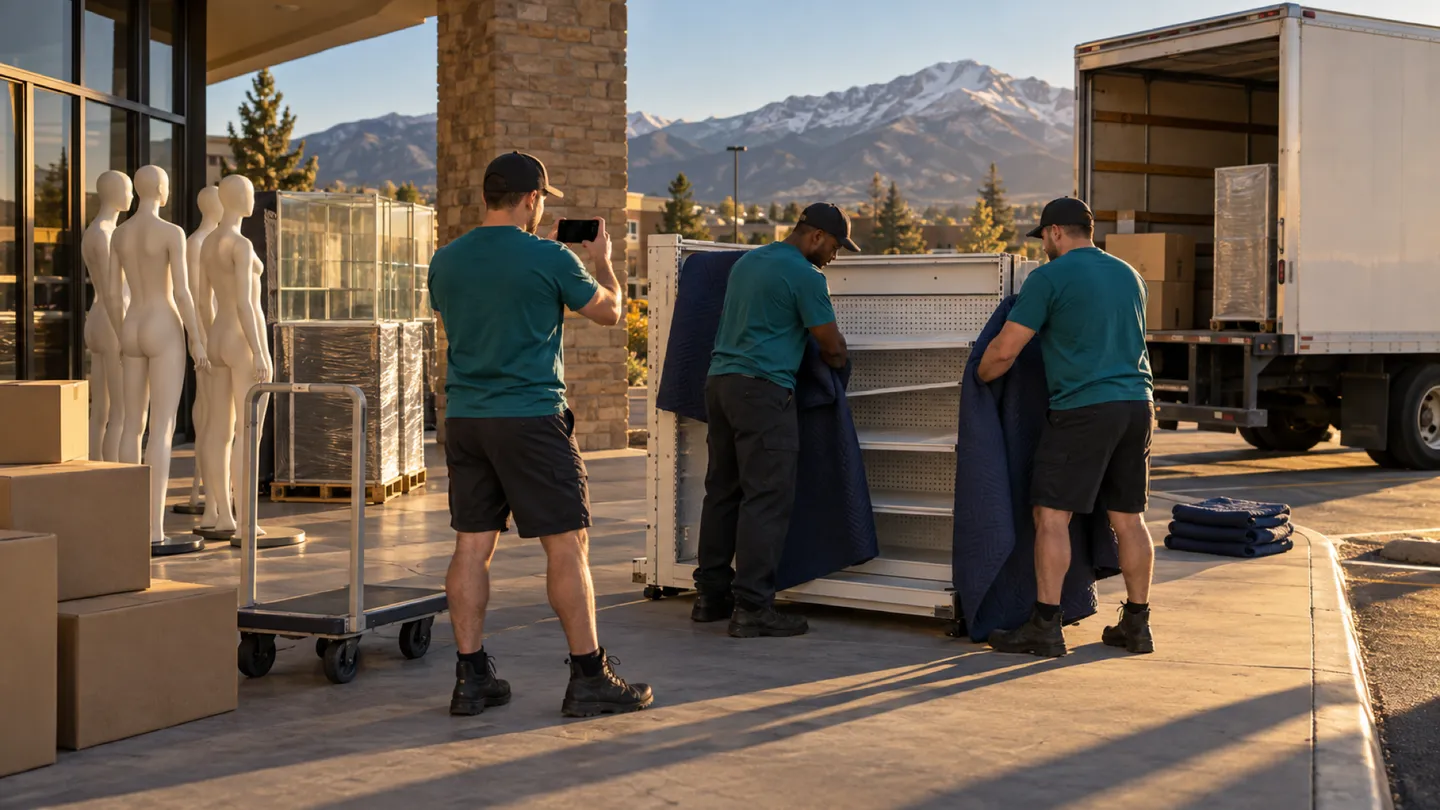
Photograph, code, take down, and rebuild your gondolas, showcases, and mannequins to the new fixture plan, inside the property's move-in rules.

(719) 357-5865
Retail Fixture Disassembly & Reassembly moving in Colorado Springs: moving crew at work
  • 18+ Years Experience
  • 1,013+ Reviews 5-Star Rated
  • Family Owned Local Business

Start your free commercial move quote

verified For estimate purposes only credit_card_off No credit card required

How We Plan Retail Fixture Disassembly & Reassembly

This service covers the fixtures, not the stock. It suits a store relocation, a remodel that swaps one layout for another, or a second location opening with fixtures from the first. The work runs in a fixed order. First, a walk-through with your store manager to match each fixture to its spot on the new plan and to note what is fastened to the building. Second, photos of every run and case from the front, back, and ends, with a fixture code written on the plan and on a tag. Third, teardown after your team has pulled the merchandise. Fourth, loading by destination zone. Last, the rebuild, working from those photos.

Your side of the job is short but it matters: a final fixture plan, cleared shelves, the keys to every case, and a decision on which pieces get reused, sold, or left behind. When the plan changes, send it before teardown, because codes are cheap to change while parts are still together.

Who usually signs off
Store owner or facilities lead, with the visual merchandiser confirming fixture positions and the landlord approving access
Timing that works
After your staff have pulled the merchandise and the new fixture plan is final; the rebuild lands inside the property's move-in hours and before your merchandising reset.

What typically moves

  • Gondola runs and endcaps Shelf count and pitch are recorded per run, and base feet, kick plates, and end trim are bagged under the run code.
  • Slatwall shelves, faceouts, and waterfall arms Removed from the panels and boxed by wall section. The panels themselves come down only if your installer and lease allow.
  • Glass showcases and tower cases Doors taped or removed, glass shelves wrapped one at a time, and lock cores left for your manager.
  • Full and partial mannequins Separated at the factory joints, with hands and wig caps bagged to the figure number and bases kept with their rods.
  • Nesting tables, risers, and display cubes Nested only where the finish allows; painted and laminate faces get a layer between them.
  • Cash wrap modules and counter tops Unbolted at the module joints and numbered left to right so the counter reassembles in order.

Access and scheduling

Most of the calendar belongs to other people. The landlord or tenant coordinator sets when fixtures may move through the center, often before opening or after close, and which service corridor and door the carts use. They may want a Certificate of Insurance naming the property owner before the dock is reserved. Your contractor needs the new space clean enough to set fixtures on finished flooring, and your installer needs to have set any wall systems first. Lay out those dates before we set ours.

Teardown usually takes less time than the rebuild, so we often split them across two days, with the rebuild matched to the new center's access window. When both stores must trade until the last hour, an evening teardown and a weekend rebuild keep the selling floor dark for the shortest stretch. We bring the photo set and the tagged plan to the new store so anyone on the crew can pick up a run where the last person stopped.
Protection and handling

Fixture parts look alike, so the real protection is the code. Every upright, shelf, base, and trim piece carries a tag with the run or case code, and every hardware bag carries the same code. Uprights stand on edge in padding, glass rides upright in separate cartons, and each mannequin's parts share one soft-wrapped carton, never loose on a rack.

At the new store, each run is rebuilt to its photo, leveled on the new floor, and checked for wobble before product goes on. Cases are set, glass shelves reinstalled, and doors tested. Anything cracked, bent, or missing goes on a punch list with its code and photo, which your manager gets while the crew is still on site. Your fixture dealer can then order the part, and your merchandising team sets shelf heights and styling once the structure is standing.

Who does what

Some of this job belongs to other trades. The written plan names each one.

Slatwall panels screwed to the wall and anchored cases
Your fixture installer takes them down and sets them at the new store, and your landlord decides on patching the old walls.
Lit showcases and track lighting
A licensed electrician handles anything hard-wired. Plug-in case lights travel boxed with the case.
Replacement parts and new fixtures
Your fixture dealer supplies them from the punch list; we install parts that bolt on during the rebuild.

Not part of our work

  • Patching, painting, or restoring walls where fixtures were mounted.
  • Moving or counting merchandise; that belongs to a store move or to your staff.
  • Wiring or connecting any display to building power.

Around Colorado Springs and El Paso County

In Colorado Springs, enclosed-mall and anchored-center stores at InterQuest, in Briargate, and out on the Powers corridor tend to have written fixture move-in rules, while storefronts on Tejon Street or in Old Colorado City work from the curb or a rear alley. Opening a second store up I-25 in Denver or Fort Collins? The codes and photos work on that floor plan too.

The crew that shows up

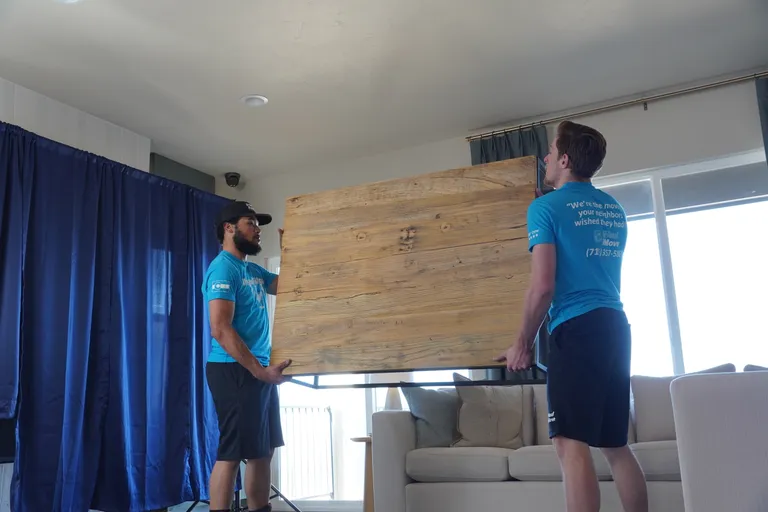
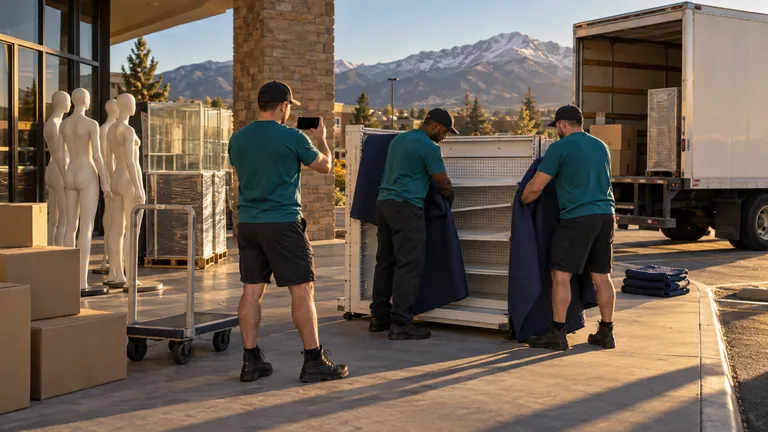
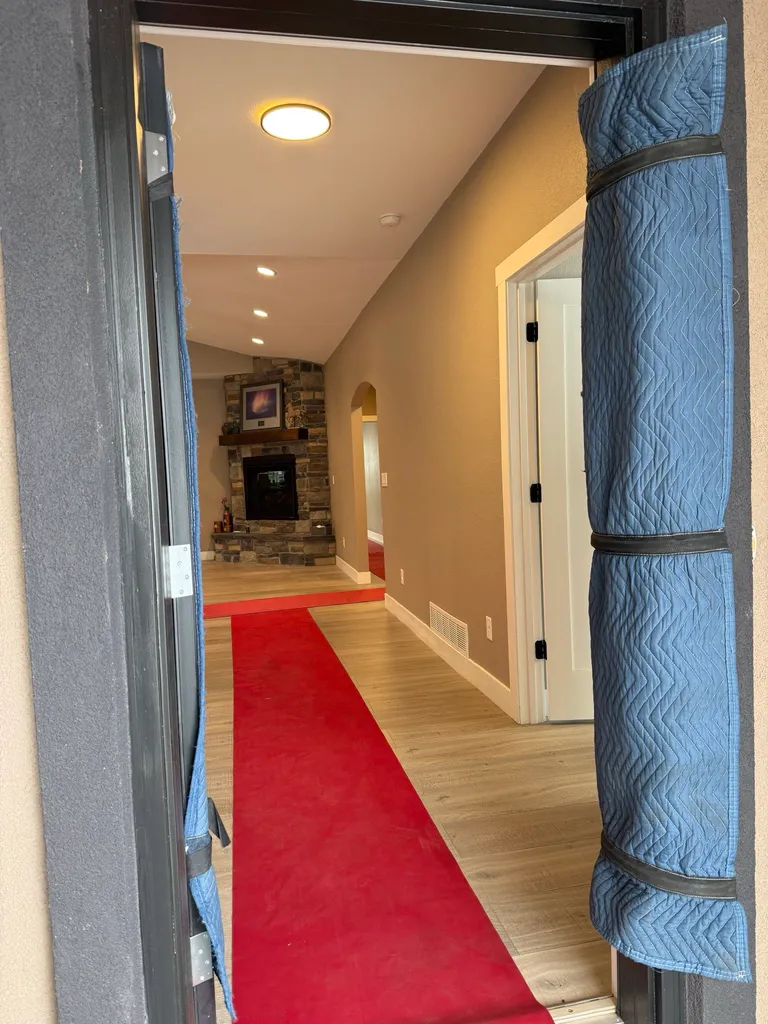
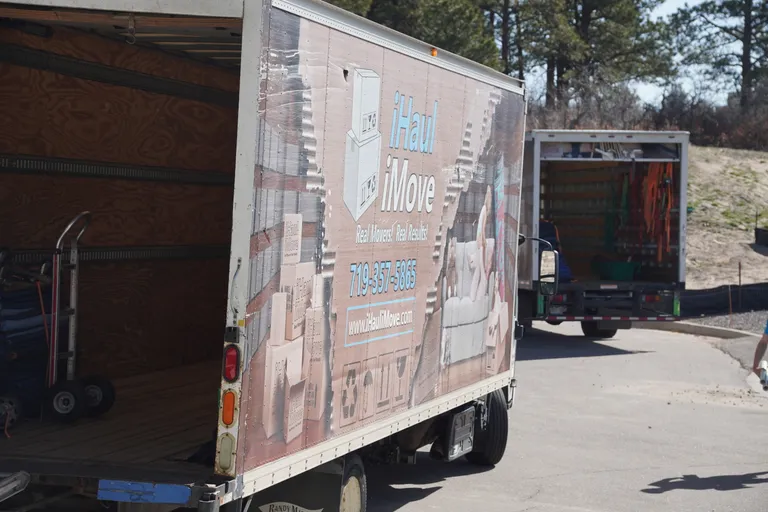
Padded door frame and a floor runner laid out before a moveTwo iHaul iMove box trucks backed in with their rear doors openTwo iHaul iMove movers raising a large wood tabletop together

Retail Fixture Disassembly & Reassembly FAQs

Another question? Call (719) 357-5865.

Can you rebuild our gondola runs shorter than they were?

Yes, if the parts support it. A shorter run leaves spare uprights, shelves, and backs, and a longer one needs parts you may not have. We mark the change on the plan during the walk-through and list the leftover or missing pieces so your fixture dealer can confirm fit before teardown starts.

Who keeps track of the showcase keys during the move?

Your store manager. Cases travel locked or with the doors removed, depending on the design, and the keys stay with the manager the whole time. If a lock core needs rekeying or repair, your locksmith or fixture dealer handles it at the new store once the case is set and leveled.

Our mannequins came from different suppliers. Will their parts get mixed up?

Not if each figure has a number before it is taken apart. We write the number on the torso, both arms, hands, base, and rod, then pack them together. Figures from different suppliers use different joint fittings, so keeping each set whole also keeps your visual team from forcing a hand onto the wrong arm.

What happens to fixtures we are not taking to the new store?

You decide. Tag them as leave, sell, or discard during the walk-through. We leave tagged pieces in place for a buyer or the landlord, or haul discards to a recycler or donation site you choose. Our junk removal service can take the leftovers the same day.

Plan your business move

Tell us both addresses, the building rules you know about, and the dates you cannot move. We will send back a written plan and estimate.

Call (719) 357-5865

Open 24 hours a day

Call Now call 719-357-5865