Education, Civic & Community

Museum and Gallery Moving in Colorado Springs

Your registrar releases each object and your curator sets how it is handled. We move the vitrines, plinths, walls, and crates around that list.

(719) 357-5865
Museum & Gallery moving in Colorado Springs: moving crew at work
  • 18+ Years Experience
  • 1,013+ Reviews 5-Star Rated
  • Family Owned Local Business

Start your free museum & gallery move quote

verified For estimate purposes only credit_card_off No credit card required

Planning a Museum & Gallery Move

In a museum or gallery, nothing moves until the registrar says so. Every object has a record, a condition report written before it leaves its spot and again when it arrives, and sometimes a lender whose loan agreement spells out who may handle it and how it travels. The curator decides how each work is packed. Our job sits around those decisions: vitrines, plinths, temporary walls, storage furniture, and crates that the curator has approved for our crew.

High-value and loaned works often go with a fine-art shipper or a courier the lender sends, and we plan around their visit instead of competing with it. For pieces your curator does assign to us, we can build custom crates to the object's measured size, marked with its accession or inventory number and the orientation the curator specifies. Glass vitrine tops come off with the installer, not with us. A gallery changing addresses follows the same logic in miniature, with the owner or director acting as registrar, and the release list is simply a spreadsheet of what is ready to go.

Who usually signs off
Museum director, gallery owner, or exhibits manager, with the curator approving handling instructions for each work
Timing that works
The closing date of the current show and the opening of the next set the window, with loan return dates and any courier visits fixed inside it.

What typically moves

  • Vitrines and case bases Glass tops, lighting, and locks come off with your installer first; the empty bases are padded and marked to their new gallery position.
  • Plinths and pedestals Painted plinths get clean wrap on every face, since a scuff on a white plinth shows from across the room.
  • Curator-approved artwork crates Carried in the marked orientation, never stacked, and set where the registrar directs at the receiving end.
  • Temporary gallery walls and panel systems Moved in layout order with feet, connectors, and brackets bagged to each section for the installer.
  • Flat files and storage cabinets from collection storage Moved only after staff decide whether contents travel in place or are removed and packed separately.
  • Retail counter, bookshop fixtures, and front-desk furniture The museum shop and admissions desk move on their own run so they can open with the galleries.

Access and scheduling

Work backward from the next opening. The registrar builds the release list room by room, the installer schedules case and wall teardown, and loan returns or courier visits get fixed dates the rest of the plan must respect. We slot furniture and crate runs into the gaps so the installation crew is never waiting on us or tripping over us.

Measure the whole route with crate dimensions in hand: gallery doors, the turn at the loading bay, elevator cab depth, and any stairs. Galleries in older buildings often have one narrow street entrance and no dock. Visitors complicate daytime moves, so ask about an early start before the doors open or a Monday when many galleries are closed. Confirm Certificate of Insurance needs with both buildings. Summer afternoon storms and hail on the Front Range are reasons to keep a crate indoors until the truck is backed up and ready.
Protection and handling

Only works the curator has released and assigned to us are on our load plan. For those, the crate is measured to the object and the exit route, lined as the curator directs, closed, and labeled with its number and an up arrow. At the destination we set the crate down and leave it closed; unpacking, condition checking, and hanging belong to your staff or installer.

Furniture and fixtures get their own care. Vitrine bases have fragile corners even without glass, so they get corner guards and ride upright. Plinths and wall panels are wrapped in clean pads to protect their paint, with each section's hardware in its own labeled bag. We keep released art crates and empty fixtures on separate loads so an installer never has to move a crate to reach a plinth.

Who does what

Some of this job belongs to other trades. The written plan names each one.

Loaned or high-value works
A fine-art shipper or the lender's courier packs and transports them under the loan terms. We schedule our runs around their visit.
Vitrine glass, case lighting, and mounted exhibit components
Your exhibit installer and a licensed electrician remove and reinstall them. Our crew moves the empty case sections.
Condition reports and object records
Your registrar or conservator documents condition before and after the move. We follow their release list.

Not part of our work

  • Unpacking, condition checking, mounting, or hanging artwork.
  • Handling any object not released by the registrar and assigned to our crew by the curator.

Around Colorado Springs and El Paso County

Colorado Springs galleries cluster around downtown's Tejon Street, the west-side blocks of Old Colorado City, and Manitou Avenue in Manitou Springs, many in older storefronts with street loading only. Larger museums and campus art spaces near Colorado College and UCCS have docks but stricter facilities rules. A show traveling up I-25 to a venue in Denver or Fort Collins keeps the same crate numbers at both ends.

The crew that shows up

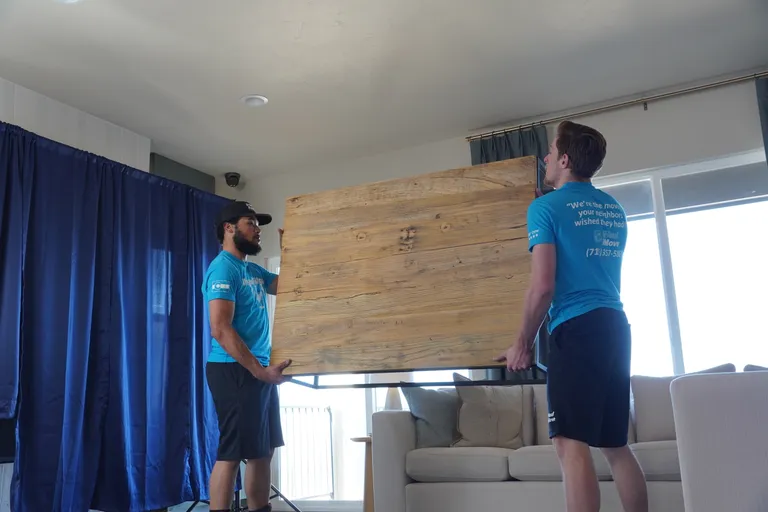
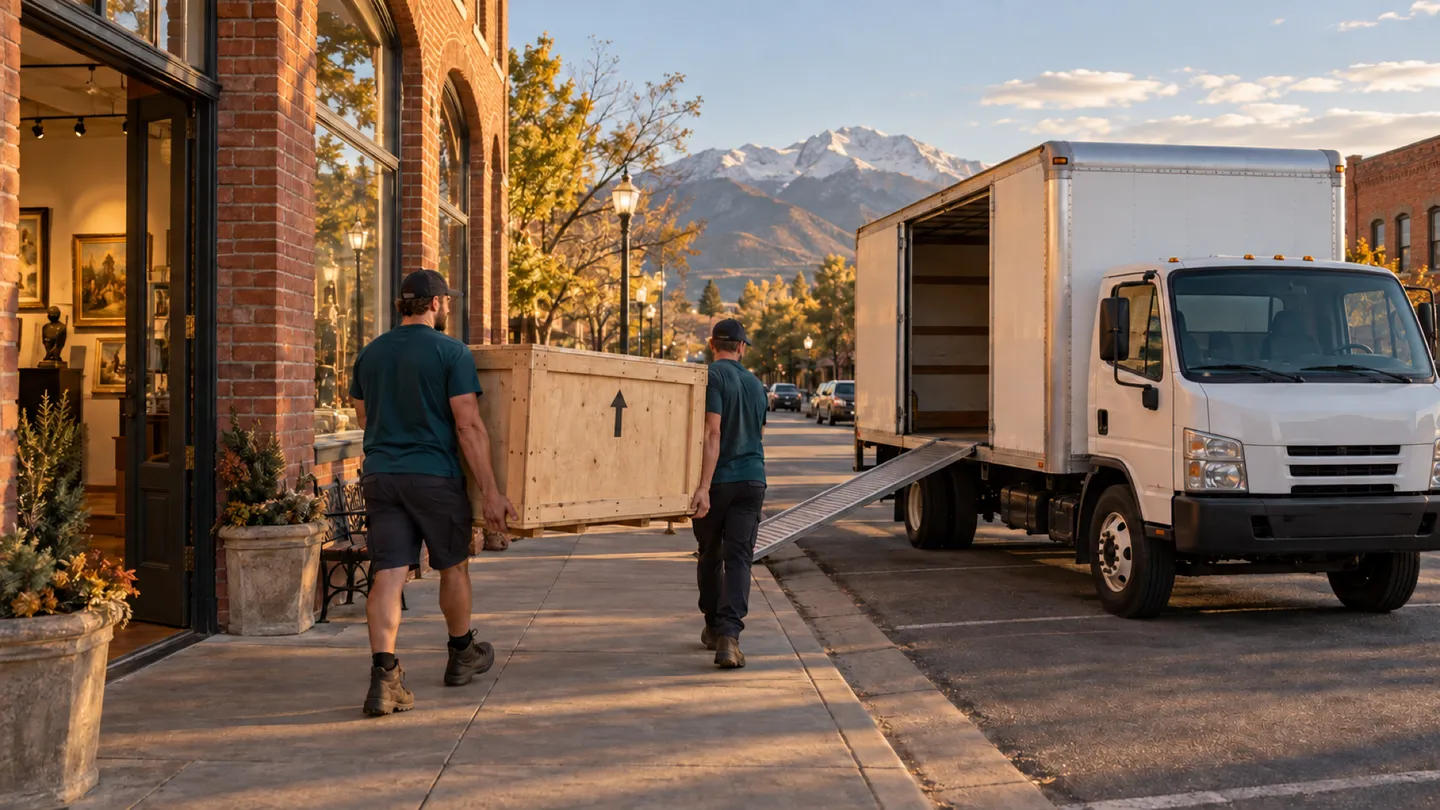
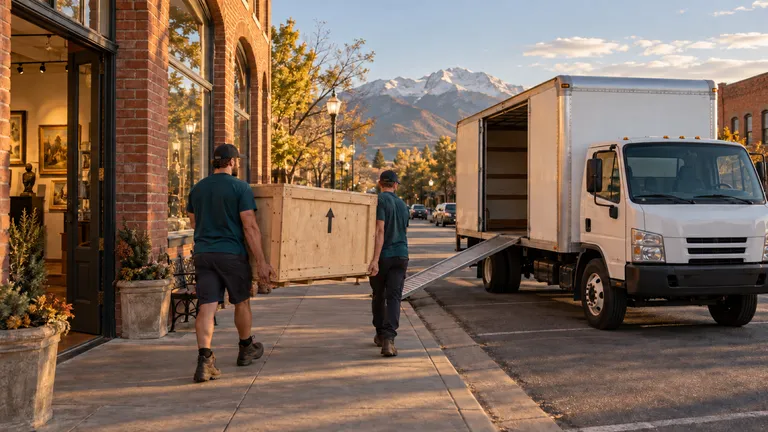
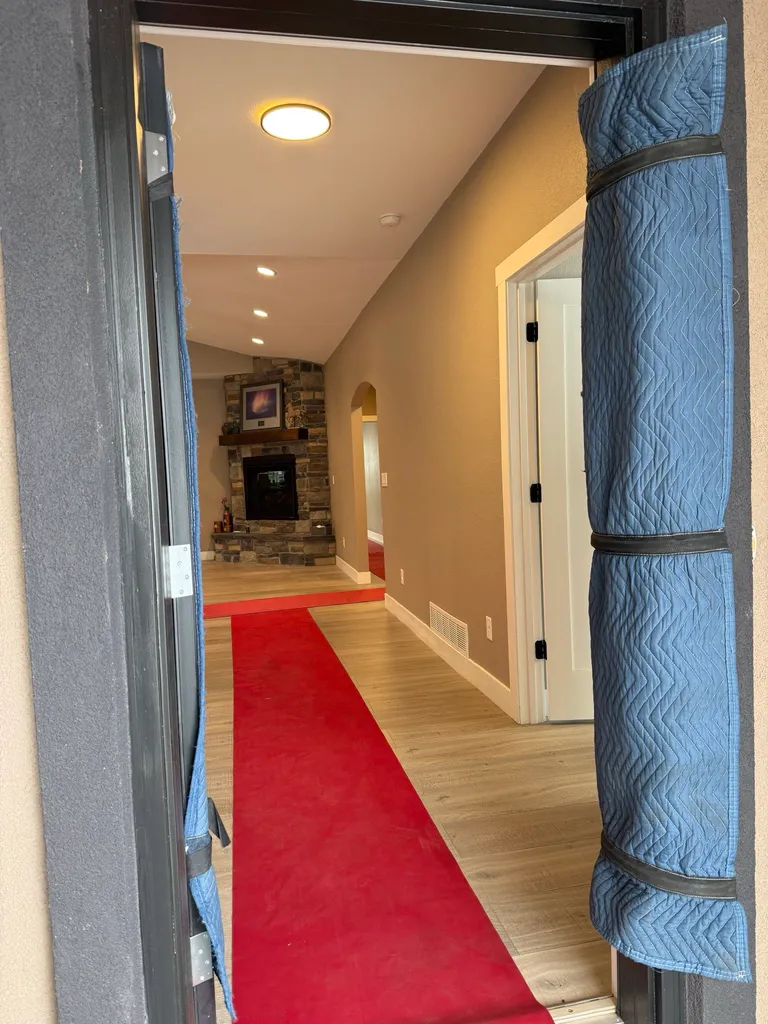
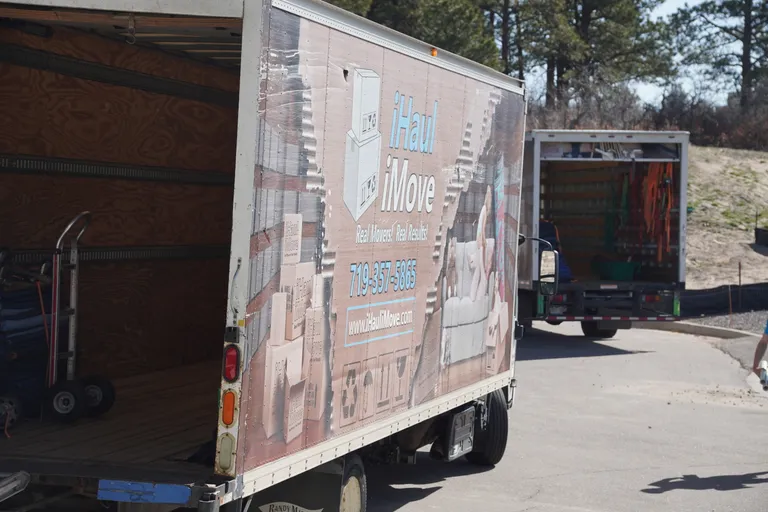
Padded door frame and a floor runner laid out before a moveTwo iHaul iMove box trucks backed in with their rear doors openTwo iHaul iMove movers raising a large wood tabletop together

Museum & Gallery Moving FAQs

Another question? Call (719) 357-5865.

Who decides whether your crew may carry a painting or sculpture?

Your curator, work by work, and the registrar releases it. Loaned pieces follow the lender's agreement, which may require a fine-art shipper or courier. For works the curator assigns to us, we build and label crates to their instructions and carry them closed. Send the object list with those decisions before we plan the loads.

Can a vitrine move with its object still inside?

Plan on no. The registrar or curator removes and packs the object first, then your installer takes off the glass, lighting, and locks. Once the case is empty and released, we pad the base, keep its parts together, and move it to its new gallery position. That keeps the case and the object on separate plans.

What do you need to build a crate before the show closes?

The object's dimensions including any projections, its weight if known, the orientation it must travel in, and the curator's lining and packing directions. We also need the exit route and the destination room so the crate fits through both buildings. We can measure the route while the registrar finishes the condition report.

We are a small gallery moving storefronts. Do we need all of this?

A smaller version of it. The owner or director acts as registrar, keeping a simple list of what is ready and how each piece should travel. We crate or blanket-wrap the pieces you assign us, move pedestals, walls, and the front counter, and set everything in the new space in the order you want to hang.

Plan your business move

Tell us both addresses, the building rules you know about, and the dates you cannot move. We will send back a written plan and estimate.

Call (719) 357-5865

Open 24 hours a day

Call Now call 719-357-5865