
Healthcare & Medical

Health System Administrative Office Moving in Colorado Springs

Billing, coding, and department offices moved between medical office buildings, with the system's badge and escort rules deciding how the crew gets in.

(719) 357-5865
Hospital System Administrative Office moving in Colorado Springs: moving crew at work
  • 18+ Years Experience
  • 1,013+ Reviews 5-Star Rated
  • Family Owned Local Business

Start your free hospital system administrative office move quote

verified For estimate purposes only credit_card_off No credit card required

Planning a Hospital System Administrative Office Move

A health system's business offices rarely sit together. Patient financial services might fill a floor of one medical office building, coding and credentialing another, and a department's administrative staff a suite above a clinic. When the system consolidates or trades space, those groups move between buildings still full of patients, and that shapes the whole plan.

The work here is administrative: billing and coding floors, department offices, credentialing, and conference rooms in medical office buildings around UCHealth Memorial Central, Memorial North, and the Penrose-St. Francis area. Clinical areas and inpatient buildings are outside it. Your department lead sets seating and phase order. The property manager or the system's facilities team sets the route, the hours, and the entry rules, and the crew works inside both.

Revenue-cycle teams also run on a calendar. Month-end close is a bad week to unplug coders, so phases usually start after close, one department per weekend, with each group working on Monday. Clinic moves inside the same buildings are described on the healthcare moving hub.

Who usually signs off
Administrative department lead or facilities contact who approves the suite plan and obtains building access instructions
Timing that works
Clinics in most medical office buildings close on weekends, so admin phases usually run on a Saturday on request, one department at a time and clear of month-end billing close.

What typically moves

  • Coding and billing workstations with dual monitors Monitors, docks, and headsets carry the seat number from the new floor plan and are reconnected at that desk for your IT group's login checks.
  • Patient financial services benching and pedestals Bench sections come apart and go back in the same rows. Pedestals stay locked in transit, and the department lead keeps the keys.
  • Credentialing and medical-staff office file cabinets Emptied or locked as the department chooses. Staff pack and seal anything carrying provider or patient details.
  • Department conference tables and training-room chairs Tops travel on edge with their bases bagged; training rooms are set in the rows your educator uses.
  • Interoffice mail and courier sorters Slots keep their labels so internal mail keeps moving the Monday after the phase.
  • Leadership offices and huddle rooms Moved last in each phase, after the teams they support are seated and working.

Access and scheduling

Medical office buildings are designed for patients, not trucks. Many have parking garages too low for a box truck, so the truck stages at a surface loading area the property assigns, and the carry path runs through a service corridor or a patient elevator lined with pads. On clinic days that elevator belongs to people in wheelchairs and on walkers, which is why most admin phases run on Saturday, on request, when the clinics downstairs are closed.

Entry is the facility's call. Some systems register outside vendors through their own check-in process before issuing a temporary badge; others send an escort with the crew. Your contact tells us which, sends crew names ahead when asked, and confirms whether the Certificate of Insurance should name the system, the property owner, or both. Approval at one building does not carry to the next, so each address gets its own check.

Protection and handling

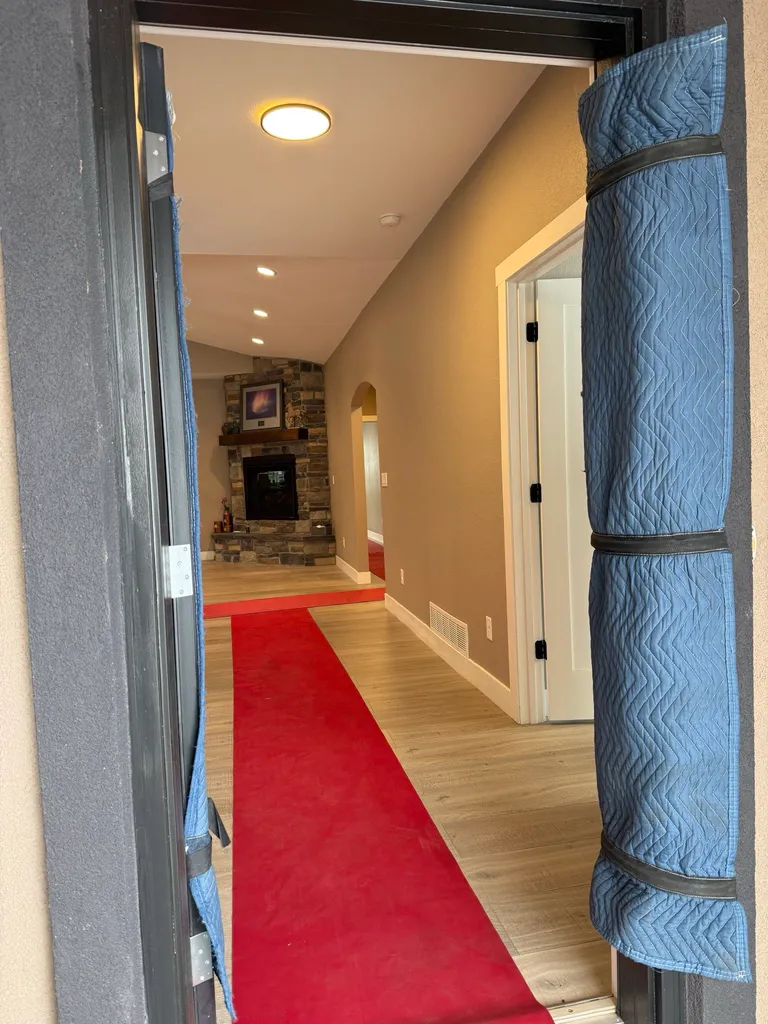
Protection is about the path patients use on Monday. Elevator pads, corner guards on lobby walls, and floor runners are laid ahead of the first cart and lifted after the last, leaving nothing for a clinic to find. Carts wait inside the suite until the route is clear, and loads never sit in a shared lobby or block a drop-off loop.

At each seat, the crew unplugs and pads the computer, monitors, and dock, then reconnects them at the matching seat number on the new plan. The system's IT group handles logins, phones, and network ports. Department staff decide which paper files leave, seal those cartons, and name who receives them; the crew carries them closed. Built-in reception counters and hard-connected equipment are released by the facility's own trades first.

Who does what

Some of this job belongs to other trades. The written plan names each one.

Badges, vendor check-in, and escorts
The health system's security office or the property manager issues them and sets the route. The crew follows each building's instructions.
Logins, phones, and network ports
The system's IT group restores them once each desk's hardware is back on its seat.
Built-in reception counters and building-wired equipment
Facility maintenance or a licensed trade releases them. We move freestanding pieces only.

Not part of our work

  • Work in clinical areas, patient rooms, or inpatient buildings; this page covers administrative suites only.
  • Opening, sorting, or deciding the contents of billing, coding, or credentialing files.
  • Issuing badges or granting entry, which stay with the facility.

Around Colorado Springs and El Paso County

Colorado Springs medical office buildings sit in clusters: around UCHealth Memorial Central near downtown, around Memorial North up in Briargate, and along North Nevada Avenue near Penrose-St. Francis. Each cluster has its own garages, loading areas, and patient drop-off loops, and admin departments often shift among them. A group relocating up I-25 toward Denver or Fort Collins meets a new set of entry rules at the receiving building.

The crew that shows up

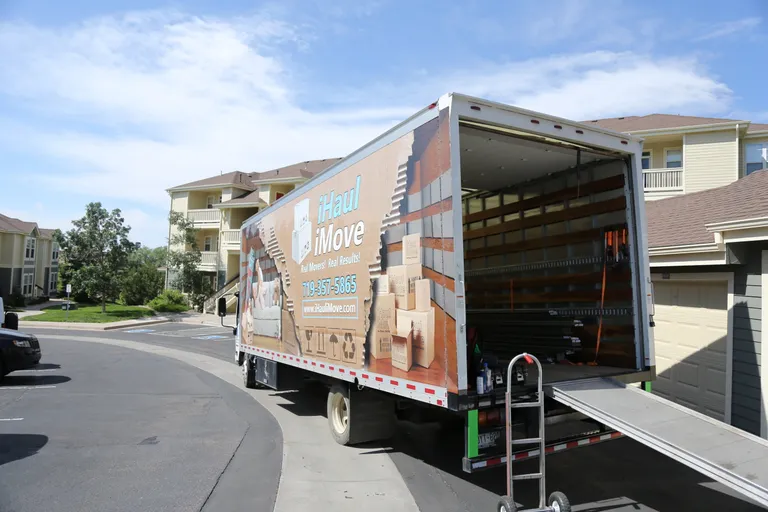
iHaul iMove box truck with its ramp lowered and a hand dolly waitingTwo iHaul iMove movers carrying a stretch-wrapped piece of furniturePadded door frame and a floor runner laid out before a move

Hospital System Administrative Office Moving FAQs

Another question? Call (719) 357-5865.

Can our billing department move without disrupting month-end close?

Yes, if the phase is booked for the weekend after close rather than before it. Coders and billers finish the month at the old desks, the crew moves them on Saturday, and each workstation is reconnected at its seat number so your IT group can test logins before Monday. Departments that close on different days can be split across weekends.

Why can't the moving truck use the medical office building's parking garage?

Most garages at medical office buildings have clearance set for cars and vans, and a box truck will not fit under it. The property usually assigns a surface loading area or a dock instead. Ask the property manager where that is and how long the truck may stand there, because it changes how far the crew carries each load.

How does the crew get through a health system's vendor check-in?

Your contact asks the facility what it requires: advance crew names, a registration step, a temporary badge, or an escort. We supply whatever details are requested and arrive at the check-in point the facility names. If the destination building belongs to a different property, the same questions get asked there before the date is final.

Can several departments move into one building over consecutive weekends?

Yes. Each department gets its own phase, floor plan, and seat numbers, and we load one group at a time so desks never mix on the truck. Tell us the order your leadership wants and which teams share a floor, so earlier phases leave a clear route for the later ones.

Plan your business move

Tell us both addresses, the building rules you know about, and the dates you cannot move. We will send back a written plan and estimate.

Call (719) 357-5865

Open 24 hours a day

Call Now call 719-357-5865