

Healthcare & Medical

Home Health Agency Office Moving in Colorado Springs

Your clinicians keep driving to patients. We move the supply room, scheduling desks, and conference room so the new office works the first morning they stop in.

(719) 357-5865
Home Health Agency moving in Colorado Springs: moving crew at work
  • 18+ Years Experience
  • 1,013+ Reviews 5-Star Rated
  • Family Owned Local Business

Start your free home health agency move quote

verified For estimate purposes only credit_card_off No credit card required

Planning a Home Health Agency Move

Almost nobody at a home health agency works at the office. Nurses, therapists, and aides spend the day in patients' homes across El Paso County and come in to restock dressings, drop off paperwork, or sit in a case conference. That makes the move a supply problem more than a furniture problem: if a clinician arrives Monday and the wound-care shelf is still in cartons, visits suffer.

So we plan backward from the supply room. Your supply coordinator decides what stock staff carry in their cars through the move, what rides in cartons, and which shelf each group lands on. The crew moves the wire shelving first, sets it to that shelf map, and stages sealed cartons beside it for your staff to stock. Scheduling desks follow, then the conference and orientation rooms.

The paperwork side of an address change belongs to the agency. Home care agencies in Colorado are licensed by the Colorado Department of Public Health and Environment, and your office sends its own notices there and to payers. See healthcare moving for how other clinical offices divide the work.

Who usually signs off
Agency administrator or operations director, with the dispatch lead and supply coordinator approving the sequence
Timing that works
Visits run every weekday and often on weekends, so the move usually starts Friday afternoon and finishes Saturday on request, with the supply room stocked before Monday check-ins.

What typically moves

  • Supply-room wire shelving and bin rails Moved first and rebuilt to the coordinator's shelf map, so sealed cartons land beside the right section.
  • Sealed cartons of dressings, gloves, and visit supplies Your staff pack and seal them by shelf. We mark the destination on two sides and leave them closed.
  • Scheduling and intake workstations Computers, monitors, and headsets are tagged to each scheduler's seat and reconnected there.
  • Case-conference table and chairs Set up early if your team meets during the first week. Wall-mounted screens are rehung by your AV or building contact.
  • Clinician mail cubbies and paperwork drop boxes Moved with their name labels intact so staff find their slot at the new office without asking.
  • Locked billing and intake file cabinets Move emptied or still locked, whichever billing prefers. One named person holds the keys, and the crew never handles what is inside.

Access and scheduling

Ask your scheduler when clinicians actually come through the office. In many agencies the traffic clusters early in the morning and late in the afternoon, when staff pick up stock or drop off paperwork. We keep loading out of those windows, or leave a small stock table near the old entrance so nobody is turned away mid-route. Starting Friday afternoon and finishing Saturday, on request, gives staff a day to restock before the week begins.

Agency offices often sit in flex or single-story buildings with a rear door and surface parking. That suits the truck, but the lot is also where clinicians park between visits. Agree with the property manager where the truck stands without taking staff spaces, which door opens for the crew, and whether the landlord needs our insurance certificate. Tape the shelf map to the new supply room wall before the truck arrives.
Protection and handling

Supply stock is the part to protect. Sealed cartons ride upright and never under furniture, and any carton your staff want kept in date order gets a second label on its lid. Wire shelving comes apart by section, with shelves and collars bagged together so the rebuild matches the map. Staff decide what travels in their own cars, including anything the agency keeps locked.

At the scheduling desks, the crew disconnects and pads each computer, monitor, and headset, then reconnects it at the marked seat. Your IT contact restores phones, the scheduling platform, and remote logins for clinicians in the field. Patient charts and laptops used for visit notes stay with the clinicians and office staff who use them every day.

Who does what

Some of this job belongs to other trades. The written plan names each one.

Licensing and payer address changes
Your agency files its own notices with the state licensing office and the payers it bills. The crew has no part in them.
Scheduling platform, phones, and remote logins
Your IT contact or software vendor restores service and tests clinician access. We reconnect the desk hardware.
Rental medical equipment held for patients
The supplier that owns it arranges its transport and checks. We move the agency's own furniture and sealed stock.

Not part of our work

  • Choosing, counting, or dispensing supplies for patient visits; your clinical and supply staff decide.
  • Opening charts, drives, or cartons that hold patient information.

Around Colorado Springs and El Paso County

Home health offices in Colorado Springs are often picked for the drive rather than the address: flex buildings off Garden of the Gods Road, suites off the Powers corridor, and buildings near I-25 with quick runs to Fountain, Falcon, and Monument. Winter matters here. Snow on Monument Hill or up Ute Pass toward Woodland Park slows visits and trucks alike, so from October to April we hold a backup date.

The crew that shows up

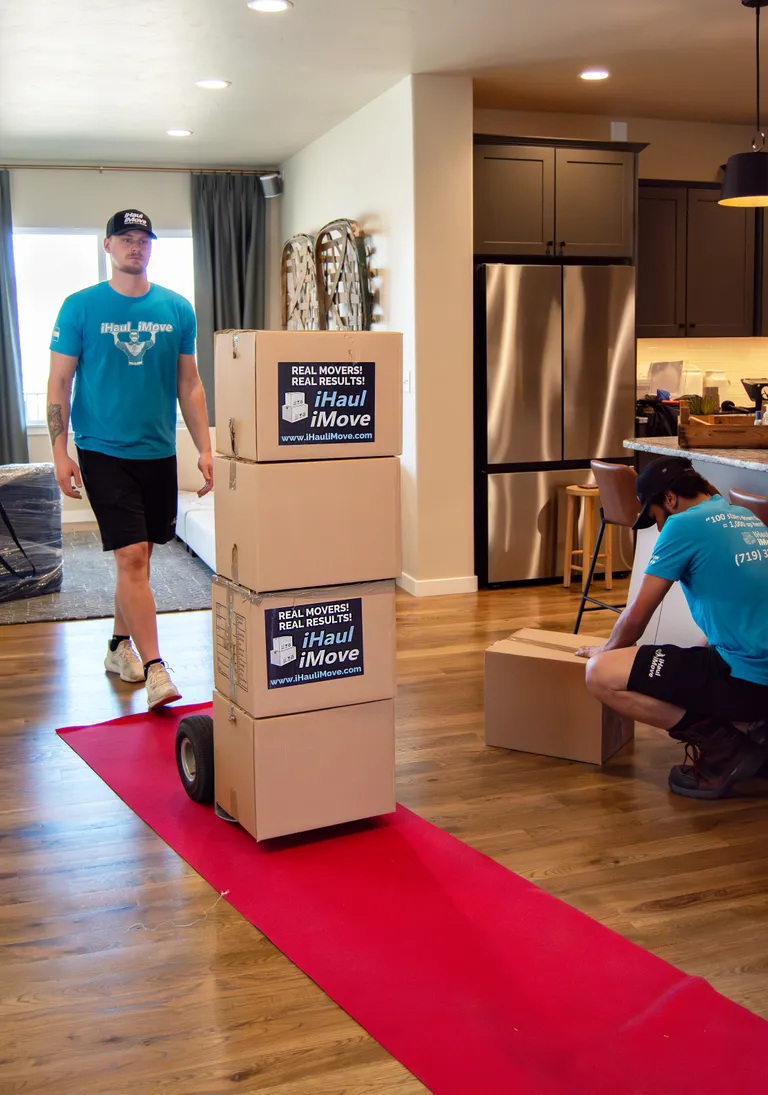
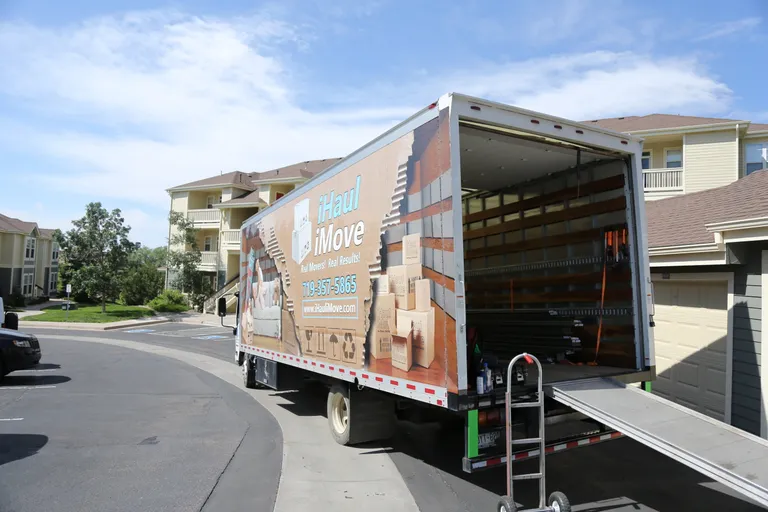
iHaul iMove mover rolling stacked boxes across a floor runneriHaul iMove box truck with its ramp lowered and a hand dolly waitingTwo iHaul iMove movers carrying a stretch-wrapped piece of furniture

Home Health Agency Moving FAQs

Another question? Call (719) 357-5865.

How do our clinicians restock during the week the office moves?

Your supply coordinator can hand clinicians enough stock for their early-week visits, or keeps a small table open at the old office until the last load. We move shelving first and stage sealed cartons beside it at the new address, so the supply room is the first room working. Staff restock from there before scheduling desks are even unpacked.

Should the supply room or the scheduling desks move first?

Usually the supply room, because clinicians feel its absence first. Schedulers can often work remotely for an afternoon, while a nurse who needs dressings cannot wait. If your schedulers must stay on phones, we move their desks last on Friday and reconnect them first on Saturday, with the supply room in between.

Who notifies the state and our payers about the new office address?

Your agency does. Licensing and payer notices are the agency's filings, and the crew has no role in them. What we can give you early is a confirmed move date and a backup date, so your administrator can plan those notices and tell clinicians when to start reporting to the new office.

Where should clinicians park while the truck is at the office?

Ask the property manager to reserve the spaces nearest the loading door for the truck, and tell staff which row to use that day. If the lot is small, we can time the truck around the morning pickup rush so clinicians coming in for stock can still reach the door without walking around a loading ramp.

Plan your business move

Tell us both addresses, the building rules you know about, and the dates you cannot move. We will send back a written plan and estimate.

Call (719) 357-5865

Open 24 hours a day

Call Now call 719-357-5865