Business & Professional Offices

Call Center Moving in Colorado Springs

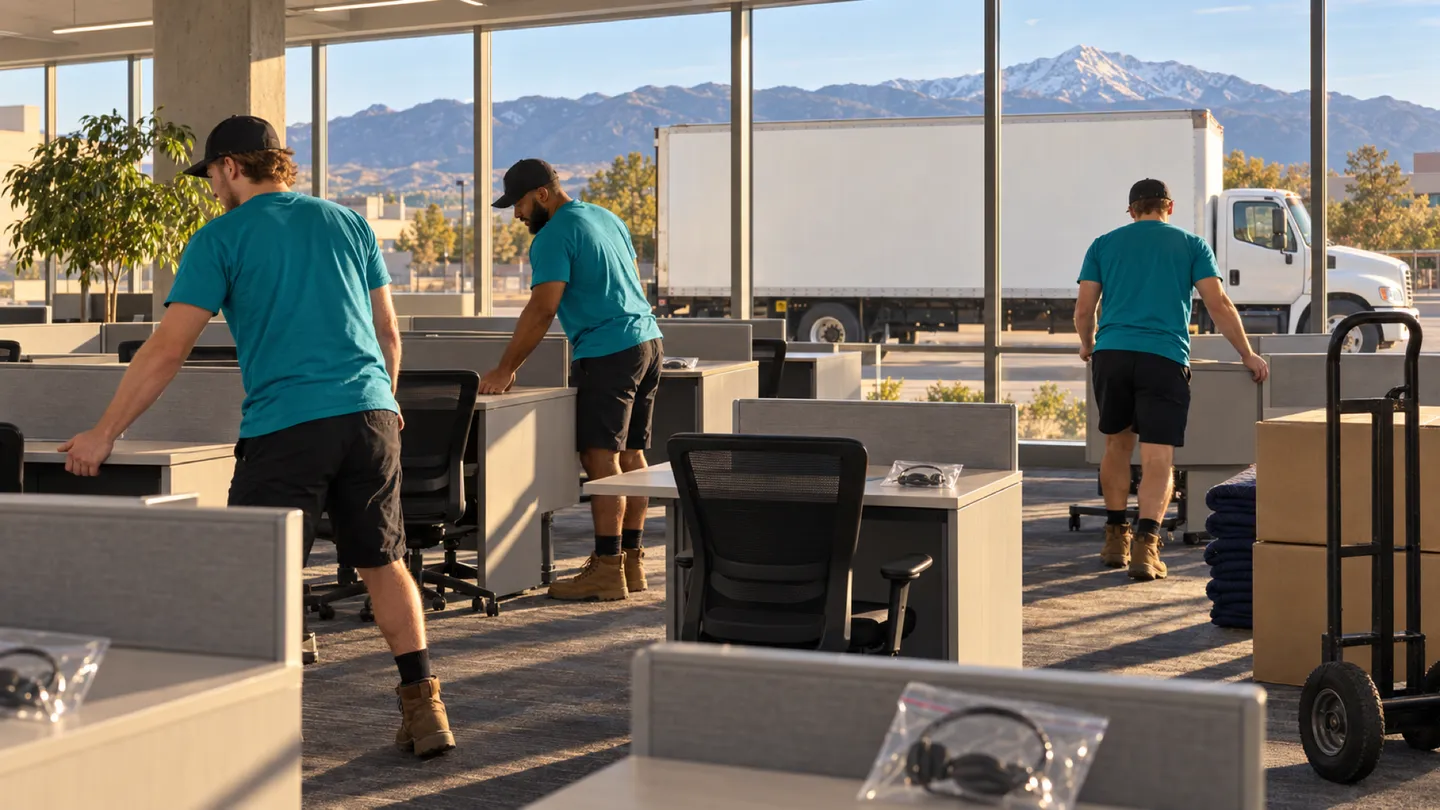
Agent rows, headsets, and supervisor stations moved between shifts, each seat tagged so the next shift logs in where the seating chart says.

(719) 357-5865
Call Center moving in Colorado Springs: moving crew at work
  • 18+ Years Experience
  • 1,013+ Reviews 5-Star Rated
  • Family Owned Local Business

Start your free call center move quote

verified For estimate purposes only credit_card_off No credit card required

Planning a Call Center Move

Call centers do not close for a move; they hand calls to another site or a skeleton crew for a set number of hours and expect the new floor to be taking calls when that window ends. So the real deadline is a shift start, and the question is how many seats can be ready by then. Workforce management usually answers it, because they know which queues can be rerouted and for how long.

A call floor is built from repetition: dozens of identical low-panel benches, the same chair, the same dual screens, and a headset at every seat. That sameness is what goes wrong. We give each seat a code taken from your new seating chart and put it on the desk, chair, screens, dock, handset, and headset bag, so an agent sits down to their own gear. Supervisor pods, the training room, and wallboard carts get codes of their own. The telecom vendor moves the phone system and tests the queues; we move everything an agent touches. Break rooms and managers' offices follow the usual professional-office plan.

Who usually signs off
Operations or site director, with workforce management setting the shift gap and the telecom vendor owning the phone cutover
Timing that works
The gap between the last scheduled shift and the next one, usually a weekend arranged by workforce management and kept clear of seasonal peaks such as open enrollment or holiday volume.

What typically moves

  • Low-panel agent benches and pods Taken apart by pod, hardware bagged per seat, and rebuilt in the same pod order on the new floor.
  • Agent headsets and USB adapters Many centers issue headsets per person. Agents seal their own in a bag marked with their seat code.
  • Desk phones and handsets Unplugged, bagged with the cord, and set on the matching seat for the telecom vendor to register.
  • Dual screens, docks, and thin clients at each seat Padded in screen cartons and reconnected at the same seat code; logins and profiles are your IT team's.
  • Supervisor stations and raised team-lead desks Placed first on the new floor so leads can see their rows while the benches go in around them.
  • Wallboard display carts and training-room tables Carts and screens move as a set. Wall-mounted displays come down by your AV or IT contact.

Access and scheduling

Everything counts back from the first shift at the new address. Workforce management names the hours calls can be routed elsewhere, the telecom vendor books its cutover inside that window, and our crew count is set so benches are standing and plugged in with time left for the vendor to test. If some queues cannot move at once, we can relocate one pod or one queue at a time over several evenings or weekends.

Call floors are dense, and elevators in multi-tenant office buildings are often shared with other tenants during the day. We ask the landlord for the freight elevator, dock hours, and the insurance certificate the building wants, then stage each pod on the new floor before the next arrives. Agents need a clear list of what to take home, what to bag, and what to leave on the desk, handed out a few days before the last shift.
Protection and handling

On a floor of identical desks, protection is mostly about keeping sets together. Each seat's screens ride in padded cartons, the dock and cables go in one bag, and the headset bag agents sealed stays closed until its owner opens it. Bench tops are wrapped and stacked on edge by pod, and the panel hardware for each pod travels in its own labeled box.

At the new floor, pods go up in chart order, then chairs, screens, and phones land on their coded seats. The crew plugs screens, docks, and phones into the desk ports; your telecom vendor registers extensions and tests routing, and your IT team checks thin-client logins. We walk each row with a supervisor before the window closes and fix any seat that does not match the chart while the crew is still there.

Who does what

Some of this job belongs to other trades. The written plan names each one.

Phone system, call routing, queues, and extension registration
Your telecom or contact-center software vendor plans and tests the cutover. We put the handsets and headsets on the right seats.
Agent logins, softphone profiles, and thin-client setup
Your IT team or managed service provider handles them once the crew has plugged each seat in.
Power and data feeds into the benches
A licensed electrician and your cabling contractor. The crew moves the bench raceway as labeled parts only.

Not part of our work

  • Rerouting calls, reprogramming queues, or testing lines, which stays with the telecom vendor.
  • Wiring bench power or pulling data cable.

Around Colorado Springs and El Paso County

Colorado Springs has many customer-service and contact-center floors, a good share in the large single-tenant and flex buildings on the east side along Powers Boulevard and near the airport, and others on the west side and in InterQuest. Those buildings usually have a dock, which helps with pod-by-pod loading. A second site up I-25 in the Denver metro can reuse the same seat codes.

The crew that shows up

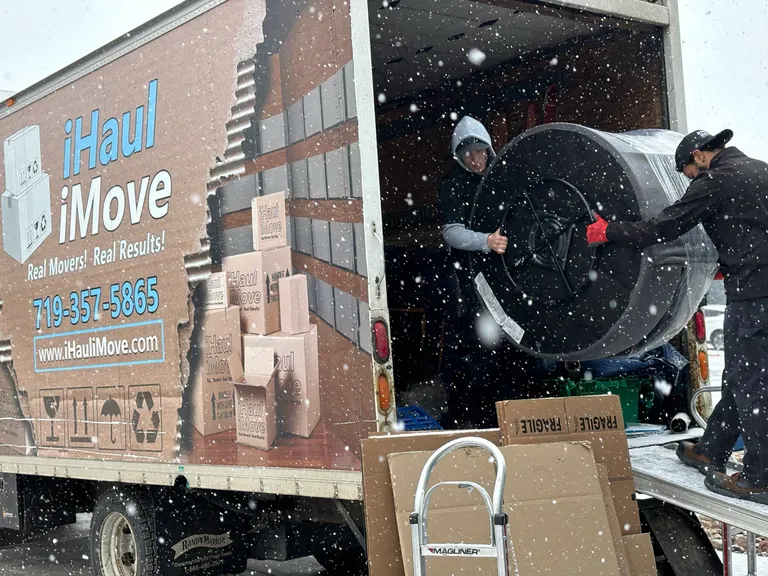
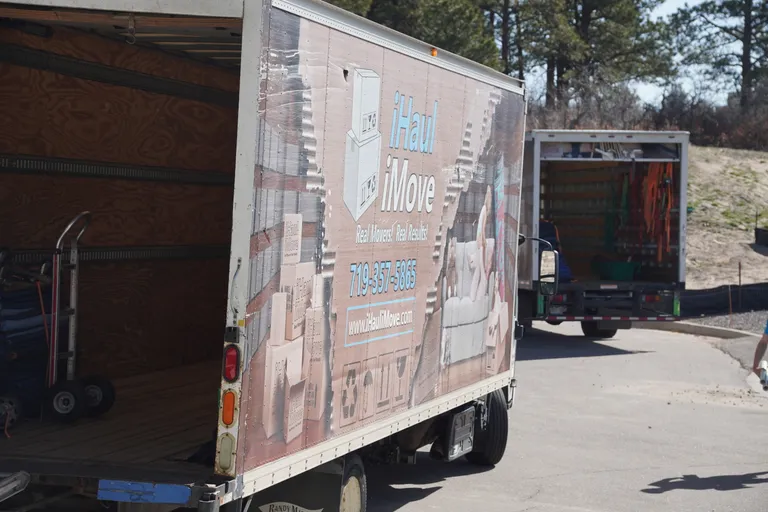
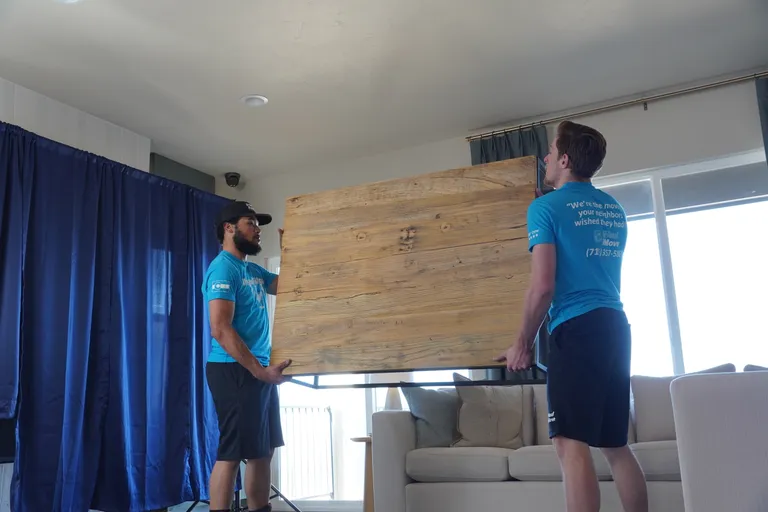
Two iHaul iMove box trucks backed in with their rear doors openTwo iHaul iMove movers raising a large wood tabletop togetheriHaul iMove crew loading a padded item into the truck as snow falls

Call Center Moving FAQs

Another question? Call (719) 357-5865.

Can we move one queue at a time instead of the whole call floor?

Yes. Workforce management picks which queue or pod moves on each date, and we move that group's benches, screens, phones, and headsets together. The telecom vendor switches that queue's routing to the new floor after we finish. It takes more dates than a single weekend, but the center does not have to hand off every queue at once.

Should agents pack their own headsets for a call center move?

We recommend it. Headsets are often issued to one person, and agents are happier opening a bag they sealed themselves. Hand out labeled bags with each seat code a few days before the last shift. Agents bag the headset and adapter, leave it on the desk, and we set it on the same seat code at the new floor.

What happens if a seat is wrong when agents arrive for the first shift?

We walk the rows with a supervisor before the move window closes, so most mix-ups are caught while the crew is on site. If a seat still turns out wrong, the supervisor swaps the gear on the chart and we move it before we leave. Keep the chart handy at the new floor during the first shift.

How do you move supervisor pods and wallboards?

Supervisor desks go in first, because leads need a view of their rows while benches go up around them. Rolling wallboard carts travel with the screen strapped and padded. Wall-mounted boards come down with your AV or IT contact, and we carry them once they are off the wall.

Plan your business move

Tell us both addresses, the building rules you know about, and the dates you cannot move. We will send back a written plan and estimate.

Call (719) 357-5865

Open 24 hours a day

Call Now call 719-357-5865