Moving With Pets to Colorado Springs: Altitude, Climate & Logistics
iHaul iMove Team
Moving Expert
Moving with pets to Colorado Springs? Expect a 7–10 day altitude adjustment, low humidity, and unique leash laws. Vet, neighborhood, and move-day playbook inside.
Moving with pets to Colorado Springs? The honest answer: expect a 7–10 day altitude adjustment period, lower humidity than almost anywhere you’re coming from, and a few city-specific rules that catch new residents off-guard. Most healthy adult dogs and cats handle the move beautifully — but the prep work happens in the weeks before, not the day of.
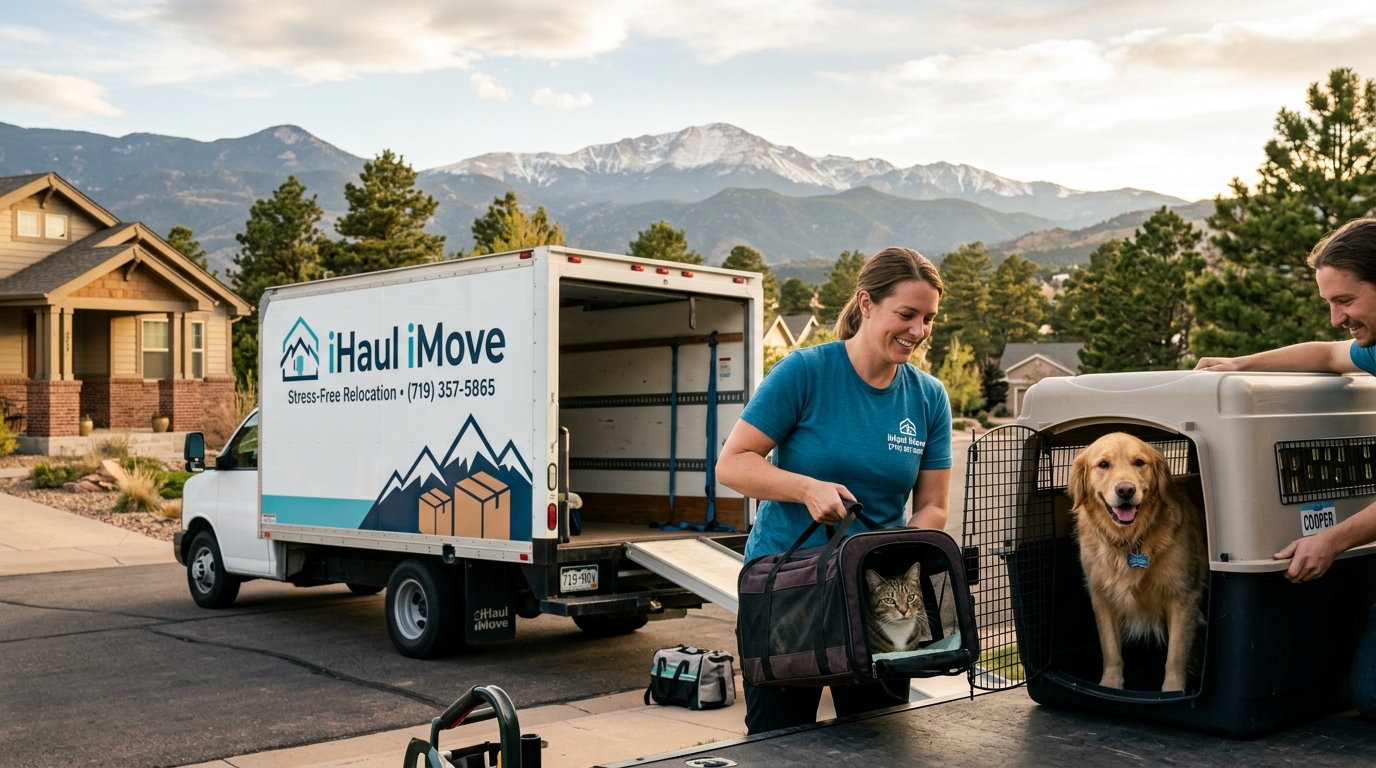
At iHaul iMove, we move thousands of Colorado Springs families a year, and roughly 70% bring pets. The questions are always the same: Will my dog be okay at this altitude? What about my cat during the move? Where do I find a vet? Where can I walk my dog? Here is the full playbook, from someone who has watched more than 8,000 pet-owning households settle into the Springs since 2008.
The Big One: Altitude Adjustment
Colorado Springs sits at 6,035 feet of elevation, with surrounding neighborhoods ranging from about 5,800 feet (Fountain and Security-Widefield) to over 7,200 feet in the foothills west of town. If you are coming from a low-elevation city — Houston, Dallas, Phoenix, Atlanta, anywhere on the coast — your pet is going to feel this.
What altitude adjustment looks like in pets
In the first 7–10 days, expect:
- Heavier panting, even at rest, especially in dogs
- Increased thirst and water intake (this is normal, encourage it)
- Lower exercise tolerance — a 3-mile walk may now feel like 5 to your dog
- Mild lethargy for the first 2–3 days
- Slightly reduced appetite in some pets for the first few days
Cats, in our experience, adjust faster than dogs — partly because their activity baseline is already lower. Senior pets and brachycephalic breeds (bulldogs, pugs, Boston terriers, Persians) take longer.
Red flags that warrant a vet call
The American Veterinary Medical Association and major emergency vet networks publish similar guidance: contact a vet if your pet shows any of the following beyond the first 48 hours of arrival:
- Persistent vomiting or diarrhea
- Pale gums or bluish tint
- Sudden collapse or fainting
- Severe loss of appetite (more than 48 hours)
- Labored breathing at rest
- Coughing up blood-tinged fluid
These can be signs of altitude-related complications, and they are not the time to “wait and see.” Colorado Springs has multiple 24-hour emergency vet clinics.
Pets that need extra care
Before relocating, talk to your current vet about elevation if your pet is:
- Brachycephalic (flat-faced breeds — bulldogs, pugs, French bulldogs, Persians, Himalayans)
- Senior (7+ years for most dogs, 10+ for most cats)
- Has heart or lung disease
- Recovering from surgery in the prior 30 days
- A high-altitude rookie with no prior elevation exposure
Most healthy pets clear the bar. Pets in the categories above sometimes need a gradual altitude ramp — staying overnight in Pueblo or Trinidad (lower elevation) before continuing to the Springs — or a delayed move until they are medically clear.
The Climate Surprise: Dry, Sunny, and High UV
Colorado Springs averages around 25% relative humidity in winter and 40% in summer — drastically lower than most of the U.S. The sun is also more intense at altitude. Both affect pets.
What dry climate does to pets
- Faster dehydration. Always have water available; consider a second water bowl after the move.
- Drier skin and paw pads. A pet-safe paw balm in winter prevents cracking.
- More static electricity on bedding and furniture. Mostly cosmetic.
- Faster sunburn on white/light-coated dogs and cats. Pet-safe sunscreen on nose and ears for outdoor pets in summer.
Extreme weather to plan for
- Summer afternoon storms. Sudden hail and lightning in July and August. Keep pets indoors during storm windows (2–6 PM during peak storm months).
- Winter cold snaps. Sub-zero overnight lows are common in December–February. Short-haired and senior dogs benefit from coats; cats should stay indoors.
- Wildfire smoke. The Front Range gets seasonal smoke from regional wildfires. On red-flag days, keep pets indoors and watch for respiratory symptoms.
Pet-Friendly Neighborhoods to Consider
Some Colorado Springs neighborhoods are dramatically more pet-friendly than others. Things to look for:
- Walkable street layout (not just car-oriented arterials)
- Proximity to a city park or dog park
- HOA rules that don’t restrict your specific breed/size
- Backyard fencing (and HOA rules on what’s allowed)
Strong pet-friendly options
- Old Colorado City and Westside — walkable, dog-tolerant business district, close to Bear Creek dog park
- Briargate / Northgate — wide sidewalks, multiple neighborhood parks, easy access to trails
- Manitou Springs — extremely dog-friendly downtown, lots of outdoor patios
- Monument and the Tri-Lakes area — bigger lots, more outdoor space, closer to mountain trails
- Black Forest — large parcels, wooded acreage, room to roam (watch for wildlife)
- Fort Carson on-post housing — pet policies vary by housing area and rank; check current rules
- Powers Corridor — apartment-dense but most complexes are pet-friendly with reasonable fees
Things to verify before signing a lease or contract
- HOA breed and weight restrictions — many subdivisions cap weight at 25–50 lbs and exclude certain breeds
- Number-of-pets limits — some HOAs cap at 2 or 3 pets
- Apartment pet fees — both one-time and monthly; some run several hundred dollars upfront
- Backyard fence requirements — some HOAs restrict fence height or material
- Insurance breed lists — separate from HOA; your renter’s or homeowner’s insurance may exclude certain breeds
Finding a Vet Before You Need One
Plan to establish care with a local vet within 30 days of your move. Colorado Springs has dozens of excellent practices. Things to do before you move:
Pre-move vet prep
- Get a full records transfer from your old vet in writing — vaccination history, lab results, prescription history, any chronic conditions
- Ask for a 90-day supply of any maintenance medications so you are not in a rush
- Update microchip registration with your new address (do this 1 week before the move)
- Get a current rabies tag and license — Colorado Springs requires pet licensing through the Humane Society of the Pikes Peak Region
- Note any altitude conversations your vet has flagged
Post-move vet visit
The first new-vet visit is usually 2–3 weeks after arrival. Bring:
- Records from previous vet
- A list of any symptoms you noticed during adjustment
- Current medications
- A list of questions (altitude, climate, local parasites like ticks and plague-carrying fleas — yes, really)
Colorado has unique wildlife disease risks. Ask your new vet about leptospirosis vaccination (common in mountain water), plague-flea risks (real in Colorado, primarily in prairie dog areas), and tickborne illness prevention.
Move Day: The Honest Logistics
Move day is the single most stressful day in your pet’s life. Here is how to make it survivable.
What to do BEFORE move day
- Maintain routine for the 2 weeks before — same feeding times, same walk schedule, same sleep spot
- Introduce the carrier or crate at least a week in advance with treats and short positive sessions
- Pack a “pet first day” bag with food, water bowls, leash, toys, medications, vet records, and a familiar blanket
- Identify a quiet room in the new home where pets will go first
- Update tags and microchip with new address
What to do ON move day
The single best move-day strategy: get the pet out of the house before the movers arrive.
Options:
- Boarding for the day at a familiar facility — recommended for high-anxiety pets
- Doggy daycare for the move-out and/or move-in
- A friend or family member taking the pet for the day
- A pet sitter at a neighbor’s house
If the pet must be at the house, designate one closed room — bathroom, bedroom, or laundry room — with a clear “DO NOT OPEN” sign, food, water, litter box (cats), and a familiar item. Tell the crew about it. Our iHaul iMove crews are trained to confirm the location of any pets at the start of every job and to leave that room for last (or skip it entirely until you give the all-clear).
What NOT to do on move day
- Do not put pets in the moving truck. Ever. Cargo holds are not safe for animals — no climate control, no ventilation, no monitoring. This is the single most important rule.
- Do not assume the cat won’t bolt. Cats panic on move day at rates that surprise even experienced owners. Doors open dozens of times. A bolted indoor cat in an unfamiliar neighborhood is a real emergency.
- Do not feed a full meal right before transport. A small meal 3–4 hours before travel; nothing in the 1–2 hours before.
Driving with pets
If you are doing a long-distance move and driving your pet to Colorado Springs:
- Stop every 2–3 hours for water and bathroom breaks (dogs)
- Keep pets harnessed or crated for safety — loose pets are projectiles in a crash
- Never leave pets in a parked car in summer, even with windows cracked
- Plan pet-friendly hotels in advance — many require notice and have weight limits
- Bring a paper copy of vaccination records in case you need to board mid-trip
For cats, a covered carrier with a familiar blanket is essential. Most cats vocalize for the first hour, then sleep. That is normal.
Settling In: The First Two Weeks
Once you are in the new house, the goal is to recreate routine fast.
Day 1
- Set up the pet’s bed, bowls, and litter box in a quiet room
- Walk the perimeter of the yard (dogs) on leash, checking fences and gates
- Feed at the usual time
- Spend time with the pet — they need the reassurance more than the unpacking does
Days 2–7
- Gradually expand the pet’s territory in the house
- Begin short, slow walks (remember the altitude — start shorter than usual)
- Meet the immediate neighbors
- Schedule the new-vet appointment
- Update license, microchip, and tags
Days 8–14
- Begin normal walk distances
- Visit one of the city’s dog parks (start with off-peak hours)
- Establish your daily walk route
- Watch for any delayed altitude or climate symptoms
Best Colorado Springs dog parks
| Park | Notes |
|---|---|
| Bear Creek Dog Park | West side, large, separate small-dog area |
| Palmer Park Off-Leash Area | Central, trails, beautiful views |
| Cheyenne Meadows Dog Park | South, well-maintained |
| Garden of the Gods | Leashed only, but iconic walks |
A Quick Note on Colorado Wildlife
Your pet is now living in the foothills of the Rockies. New-resident considerations:
- Coyotes. Active at dawn and dusk. Small dogs and cats are at real risk — never outside unattended.
- Mountain lions. Documented in foothills neighborhoods (Broadmoor, Manitou, Cheyenne Canyon). Hike with dogs on leash.
- Bears. Seasonal, mostly in foothills. Secure trash, do not feed wildlife.
- Rattlesnakes. Spring through fall in lower-elevation grasslands. Snake avoidance training is worthwhile.
- Prairie dogs and plague-carrying fleas. Keep dogs out of prairie dog colonies and maintain flea prevention.
Most Colorado Springs pets live long, happy lives — this is just a different environment than suburban Florida or coastal California.
Ready to Move Your Family (and Pets)?
iHaul iMove has helped over 8,000 Colorado Springs families relocate since 2008, including thousands with pets. We brief every crew on the pet protocol — confirm the pet’s location, leave that room sealed, work around it. Family-owned, BBB A+, 900+ five-star Google reviews, 2026 Best of the Springs Gold Movers winner. Licensed under Colorado PUC HHG-00281.
Have a pet-specific question? Call 719-357-5865. We are open 24 hours, and our coordinators can talk you through how we handle pet households — from a single cat in a 1-bedroom to a multi-dog family in Castle Rock.
The Bottom Line on Moving With Pets to Colorado Springs
- Expect 7–10 days of altitude adjustment for healthy pets — heavier panting, more water, less exercise tolerance
- Talk to your current vet before moving brachycephalic, senior, or pre-existing-condition pets
- Never put pets in the moving truck — always transport in your personal vehicle
- Pre-pack a “pet first day” bag with everything they need for 48 hours
- Designate one closed room on move day and tell the crew
- Establish new-vet care within 30 days
- Update microchip, tags, and license with your new address
- Respect Colorado wildlife and the leash laws that protect your pet from it
Get those right and the move is just another day in your pet’s life — followed by a lot of new smells, big skies, and a lifetime of mountain views.
help Frequently Asked Questions
How long does it take pets to adjust to Colorado Springs altitude? expand_more
Is Colorado Springs altitude dangerous for pets? expand_more
Should pets ride in the moving truck or with me? expand_more
What are Colorado Springs' leash laws and pet rules? expand_more
Do I need a new vet right away? expand_more
Written by iHaul iMove Team
The iHaul iMove team has over 18 years of experience moving families across Colorado. We share our expert knowledge to help make your next move your best move.
See About Us →Ready to make your move?
Get a guaranteed price quote for your move in Colorado Springs. No hidden fees, just honest service.
Experience Our Unwavering Promise
At iHaul iMove, punctuality, transparency, and the meticulous care of your property are not just policies—they are our unwavering promise. If we're not 5 minutes early, we consider ourselves late. Discover the difference of a truly dedicated moving partner.
Contact Our Team
Call Us 24/7
719-357-5865Email Us
info@ihaulimove.comLocation
Colorado Springs, CO
Hours
Open 24 hours a day